Posts

Iran Fails in Getting Sanctions' Relief from Japan

On Japanese Prime Minister Abe’s visit to Iran, The Wall Street Journal of June 13, 2019 on page 7, “Iran Urges Japan to Ignore U.S. Sanctions,” quotes Rouhani saying: “If we witness some tensions, the root is the U.S. economic war against the Iranian nation. Any time this war stops, we will witness very positive developments in the region and the world.” And Iran wanted Japan to turn its back on the U.S. and help Japan get a break from the Maximum Pressure campaign that has inflicted serious pain on Iran. The Journal article quoted Rouhani stating: “Japan’s interest in continuing to purchase oil from Iran and solving financial issues…can secure the expansion of our relations.” Not only did Abe ignore their request, he also lectured them to behave. Prime Minister Abe called Iran out for what even Obama himself called, “stirring the sectarian pot.” Abe said: “It is essential that Iran plays a constructive role in building solid peace and stability i...

The Orlando Pulse Club Massacre and the exoneration of Noor Salman

Image
Attorney Charles Swift: “The more we learned, the better Noor Salman looked” On June 12, 2016, Omar Mateen entered Pulse club in Orlando and killed 49 people and injured 53 others. He was killed by the police. Mateen was survived by a wife, Noor Salman, and a child. The US government charged Noor with crimes arising from that massacre committed by her late husband. After a jury trial in Orlando, she was found not guilty on all charges.   On social media though, Noor Salman gets a lot of hate because most people are not familiar with the case beyond the soundbites. A lot of people have questions about the case. Below are a number of questions about the case and my answers: -Why did the government charge Noor when none of the wives or girlfriends of other mass shooters got charged criminally? That is a very good question. Some people think it is a result of anti-Muslim, anti-Arab bias. Other people think it is because of the nature of the crime and the fact that...

Lebanon: History and Civil War, Myths Debunked

Image
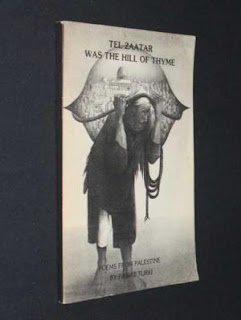
The Lebanese movie The Insult re-introduced the Lebanese civil war as a subject of interest. The movie offered the Lebanese right narrative that blames the Palestinians for the civil war. That narrative is important. I visited Abraham Lincoln’s Presidential Library last weekend and one of the frames read, as to slavery, in part: “At its most personal level, it [slavery] was a demeaning and barbaric institution that destroyed families and lives. Racism was a logical outgrowth of slavery, as slave holders tried to find moral justification for their behavior.” The last part, “moral justification for their behavior” is key. The myths and the lies the Lebanese right, Muslim and Christian, tells and promotes, is anti-Palestinian racism, used as “moral justification” for the butchering, the besieging, the starving as in Tal el- Zaater and Sabra and Shatila or as justification for continuing state violence against them by denying them the most basic of human rights....

Lebanon and the Palestinians: Myths and reality

Image
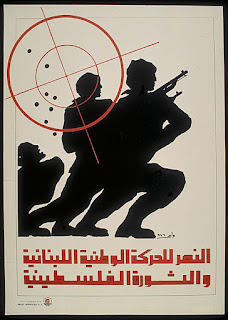
Ain El Hilweh camp, Sidon, Lebanon Lebanon and the Palestinians: Myths and reality The late Palestinian ambassador to Lebanon, Ashraf Dabbour, once responded to a question about the Lebanese civil war years and the responsibility of different Lebanese factions in massacres against the Palestinians by saying that the Palestinians want the war behind them and want to keep friends with all Lebanese. Civil wars carry painful memories. The Lebanese Civil War is not exceptional in that sense. Last January, I was driving from Kentucky to a conference in New Orleans. On the way I saw a sign that read “Shilo, Six Miles.” I did not know much about the American Civil War at the time but I have heard of Shilo. So I decided to take a detour and visit the famous Civil War battlefield site. That visit, and the controversy over Confederate monuments, created an interest in learning about the Civil War and its aftermath. It is not possible to overestimate the importance of the Civi...

Interview with Arab- American community leader Imad Hamad On Dearborn elections and the Arab American community- False claims hamper unity, depress turnout

Image
Interview with Arab- American community leader Imad Hamad On Dearborn elections and the Arab American community False claims hamper unity, depress turnout Elections are often times of high drama. The Michigan elections, particularly the Dearborn mayoral election, produced heat and noise that carried on after the elections were over and the results declared. To shed light on that phenomenon, I interviewed Mr. Imad Hamad, longtime community leader and activist and Executive Director of the American Human Rights Council. Below are edited excerpts from the interview: Q: What is your assessment of the recent elections in the Detroit area? I.H.: It was very good. A lot of excitement about new candidates. A lot of energy from the young volunteers in the different campaigns. It was gratifying to see more Arab and Muslim Americans running for office. As a community we are moving forward in important ways. We are breaking barriers. Despite all t...

Sunni-majority countries and Iran’s proselytism: Political concerns, not faith concerns

Image
On October 26, 2017, Jonathan Lawrence wrote a commentary for Reuters entitled “Sunni North Africa, fears of Iran’s Shi’ite shadow.”* Mr. Lawrence wrote: ‘Given the tiny number of Shi’ites living in North Africa and the tight control over mosques in the region, widespread Shi’ite religious influence on the ground is unrealistic. Whether or not the scale of proselytism justifies the level of concern, Moroccan and Algerian leaders view Iran’s Africa policy as a threat to their domestic order and regional security. The prospect of sectarian strife exists for “heterodox” – i.e. non-Sunni – minorities scattered across the region, numbering in the millions who live under mainstream Sunni rule. Some of these groups are offshoots of Shi’ite Islam, but are not necessarily the source of conflict. In Algeria, their mere difference – and the government’s toleration of them – sometimes provokes attack from local hardliners.’ Mere competition between religious doctrine...

Remembering the Houla Massacre. 10/31/1948

Image
Houla massacre memorial, courtesy of Houla.org Remembering the Houla Massacre. 10/31/1948 -  October 29, 2009 Houla Massacre of 1948 Apathetic State: No Military Readiness or Political Will to Stand and Fight The 1948 Houla Massacre Anniversary October 31, 2009 is the sixty- first anniversary of the Zionist massacre in Houla, a village in South Lebanon. The Zionist Hagganah gang, led by Menachem begin, blew up houses and massacred in cold blood tens of the town's men. As a consequence of the Zionist attack, (one of a string of subsequent attacks on South Lebanon over the years), led to the people of Houla becoming refugees in their own homeland in 1948, living in the Dbayeh refugee camp. It was not until the beginning of May of 1949 that these displaced Southern Lebanese were able to go back to their destroyed village. The Need for Strong defense of Lebanon The Lebanese right wing has always claimed that there is ...